People often assume I became a Realtor because I love real estate.
The truth is a little more personal than that. I fell in love with homes, their bones, their light, their quiet stubborn character, long before I ever thought about contracts, negotiations, or the market.
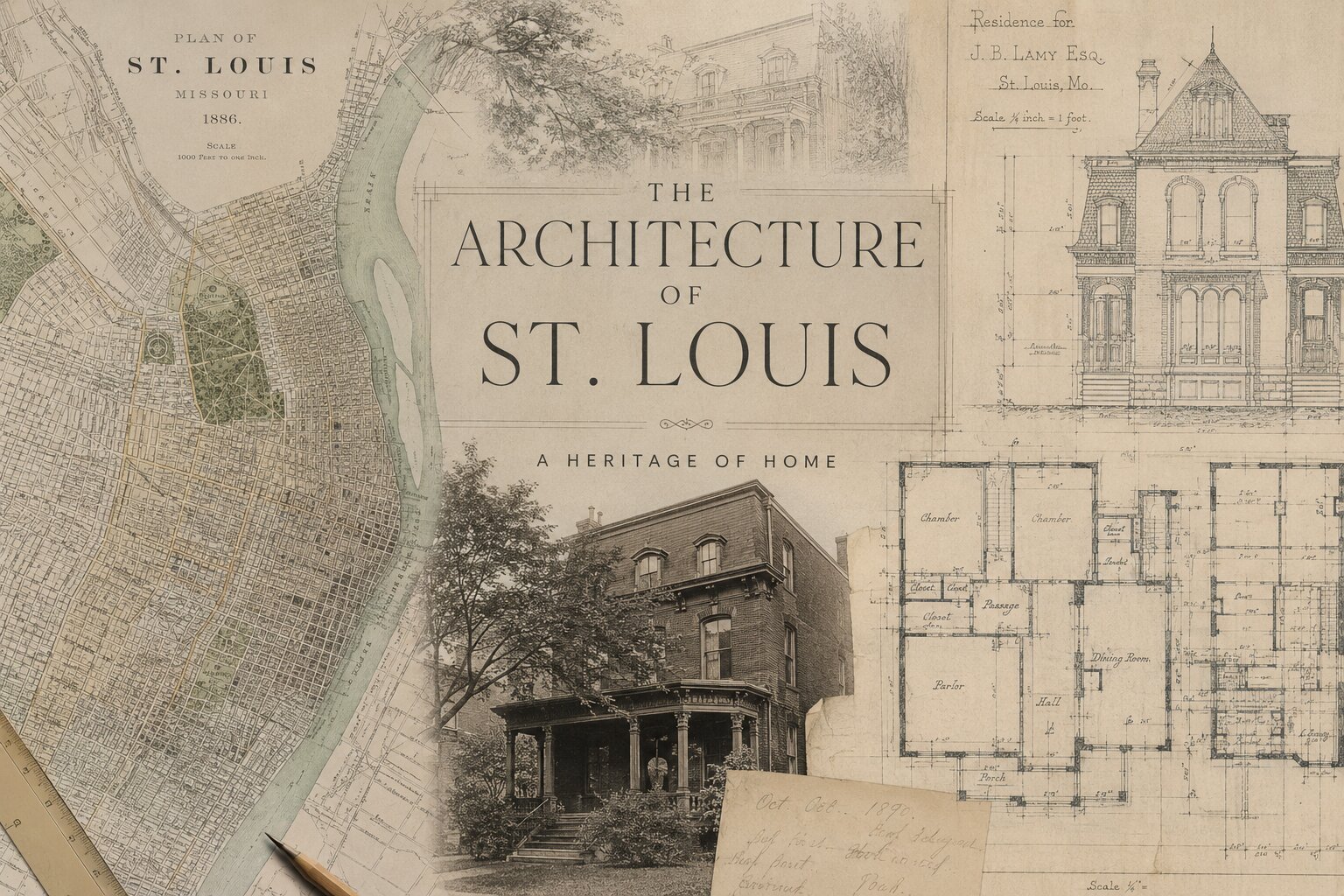
As a kid, I was the one glued to HGTV for hours, fascinated by floor plans and the way a house could make you feel something before a single box was unpacked. That fascination followed me straight into architecture school. I wanted to understand not just how buildings were designed, but why: how a change in proportion, a choice of material, or the placement of a window could completely shift the way a space felt to live in.
It’s actually the reason I ended up here, in real estate, instead of behind a drafting table. Somewhere in my studies, I realized what I loved most wasn’t designing homes from scratch. It was the homes that already existed. The ones with history already built into their walls. I wanted to be the person who connects people to those stories, not just the person who draws the blueprints. So I traded my sketchbook for a set of keys, and I’ve never looked back.
That architectural eye never left me, though. If anything, it’s become one of the biggest reasons I love what I do.
Every week, I walk through homes all across St. Louis, and I still catch myself noticing things that have very little to do with square footage or countertop finishes.
I notice the way morning light filters through a century-old leaded glass window in the Central West End, throwing small prisms across a hardwood floor. I notice the warmth of original quarter-sawn oak millwork in a Shaw bungalow, worn smooth by decades of hands. I notice the quiet symmetry of a Colonial Revival in Glendale, every window and shutter placed with the kind of discipline that feels almost mathematical. I notice the steep gables and stone-and-timber craftsmanship of a Tudor tucked beneath old oaks in Webster Groves. I notice the deep front porches in Kirkwood, built at a scale meant for sitting outside and talking to whoever walks by. And I notice the stately brick facades of Lafayette Square, standing shoulder to shoulder like a city that has rebuilt itself more than once and remembered its own history each time.
Each of these neighborhoods has its own rhythm, and you can feel it before you even step inside a house. Some are lively and walkable, the kind of place where a morning coffee run turns into three conversations with neighbors, where porches face the sidewalk on purpose. Others are quieter by design, with winding streets, mature tree canopies, and homes set back just far enough to invite a slower pace. Neither is better than the other. They’re simply different ways of living, each with a personality that took generations to settle into.
That’s one of the things I love most about St. Louis: it never grew in a single era, so it never settled into a single style.
Drive across this city and the architecture reads like chapters written by different hands. Red brick two-flats and Craftsman bungalows in the city’s older neighborhoods. Tudor Revivals and Colonial Revivals in the inner suburbs. Mid-Century Modern homes with walls of glass and low, horizontal rooflines out toward the western edges of the county, built to frame the landscape rather than compete with it. Grand Victorians with turned porch spindles and stained glass transoms in pockets that have held onto their character for well over a hundred years. Walk through one neighborhood and you’ll find intricate masonry, hand-laid brickwork, and arched entryways. Drive ten minutes in another direction and the whole architectural conversation changes.
That layered, evolving quality is part of what makes this city so specific. It’s not trying to look like anywhere else.
Of course, homes should evolve with the people who live in them. A thoughtful renovation, opening up a cramped kitchen, adding light where there wasn’t any, updating a system that’s earned its retirement, breathes new life into a space and lets it keep serving families for another fifty years. Some of the most beautiful homes I’ve ever toured are the ones where modern living and historic character have found real balance, where you can tell someone respected the house enough to update it rather than erase it.
What I hope we never lose is an appreciation for the details that simply can’t be recreated at any price.
The original hardwood floors that have quietly held up generations of footsteps. The brick laid by hand, by craftsmen who never met the families who’d eventually call that house home. The plaster crown molding shaped one run at a time. The solid wood doors, the built-in bookcases, the stained glass, the graceful archways, the things that give a house its identity before a single piece of furniture or a gallon of paint ever enters the picture.
Those aren’t flaws to be fixed.
They’re evidence that someone, a long time ago, cared enough to build something meant to last.
As a Realtor, my job is to help people find a home that fits their life. But the architecture student in me is still very much present at every showing. I still wonder why a home was designed the way it was before I ever think about staging it. I notice the proportions of a room before I notice its finishes. And I find myself imagining the decades of birthdays, first days of school, holidays, and ordinary Tuesday evenings that have already happened inside those walls, long before my clients ever arrive.
Because at the end of the day, the homes I remember most aren’t the newest or the most expensive.
They’re the ones that tell a story.
And in a city like St. Louis, we happen to be surrounded by stories worth preserving.